

Powering a Circular Economy: The Rise of Lithium-Ion Battery Stewardship
By Andrew Swann
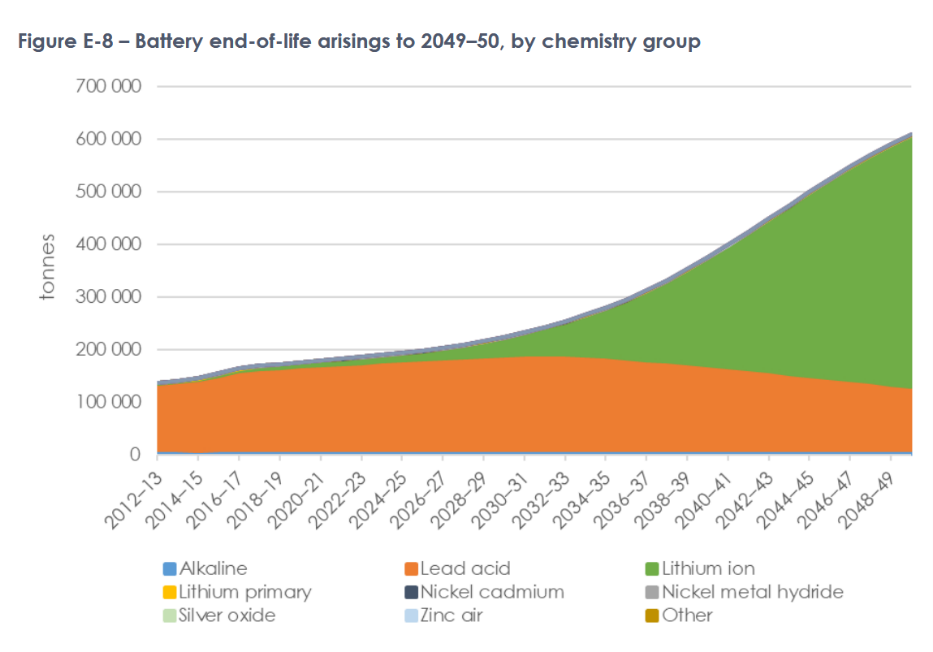
Lithium-ion batteries (LIBs) are the driving force behind our modern transition to sustainable energy, powering everything from electric vehicles to our daily consumer electronics. However, this rapid technological uptake has created a looming and complex waste challenge. In Australia alone, the volume of end-of-life lithium-ion batteries is projected to skyrocket from around 13,260 tonnes in 2025 to more than 477,890 tonnes by 2050. Historically, the vast majority of our batteries have ended up in landfills, wasting precious finite resources and leading to severe environmental and safety consequences.
SUITABLY QUALIFIED PERSONS TRAINING
__
ONLINE TRAINING FOR THE WASTE
AND RECYCLING INDUSTRY
Our online training courses are written by industry experts
__
Waste Industry news
Our courses are updated regularly to provide the most up-to-date and compliant waste management education available in Victoria
The Hidden Dangers of Improper Disposal
Disposing of LIBs in general waste or household recycling bins poses a massive and immediate risk. In the waste management sector, improperly discarded batteries are responsible for an estimated 10,000 to 12,000 fires annually across Australia. When these batteries are compacted or crushed in garbage trucks and recycling centers, they can experience “thermal runaway”—a rapid spike in temperature that causes cells to ignite, resulting in intense, toxic fires that are incredibly difficult to extinguish.
Beyond the devastating fire hazards, batteries sitting in landfills can leach toxic materials, heavily contaminating surrounding soil and groundwater. Furthermore, relying solely on traditional mining methods to extract new lithium depletes freshwater sources and releases harmful atmospheric emissions, highlighting the desperate need for a circular approach to battery manufacturing.
The Solution: Australia’s Battery Stewardship Scheme
To tackle these mounting challenges, Australia established B-cycle, the country’s official, government-backed battery recycling stewardship scheme. Operated by the Battery Stewardship Council (BSC) and authorised by the ACCC, B-cycle brings together importers, retailers, and everyday Australians to create a safe and responsible lifecycle for batteries. Under this scheme, battery importers pay a levy that funds the national recycling network, allowing consumers to drop off used batteries at thousands of accredited locations free of charge.
A Legislative Turning Point
Battery stewardship in Australia recently hit a monumental milestone. In March 2025, New South Wales passed the Product Lifecycle Responsibility Bill, making it mandatory for all battery brand owners to participate in a regulated product stewardship scheme. This landmark legislation eliminates “free riders”—
companies that previously avoided voluntary participation—and levels the playing field to ensure all brands contribute fairly to end-of-life battery management.
This state-level mandate is widely anticipated to pave the way for harmonized national regulation. In preparation for these changing regulations, the stewardship scheme has designed “B-cycle 2.0,” an expanded framework capable of accommodating a wider range of battery-powered products, including vapes, small electronics, and large portable batteries weighing up to 60 kilograms.
Economic and Environmental Benefits of Recycling
Transitioning to a circular economy for batteries provides massive benefits beyond fire safety. Recycling LIBs recovers highly valuable critical minerals, such as lithium, cobalt, nickel, and copper. Producing battery-grade lithium and cobalt from recycled LIBs requires up to 96% less raw material than mining new resources, significantly offsetting the environmental impacts associated with resource extraction.
How You Can Help
Building a safer, planet-friendly battery lifecycle requires everyone’s participation. We must treat end-of-life batteries not as waste, but as strategic resources. To do your part:
- Never toss batteries in the bin: Keep them out of your general waste and household recycling bins.
- Tape the terminals: Place a piece of clear sticky tape over the battery terminals to prevent residual charges from sparking a fire.
- Take them to a drop-off: Bring your taped batteries to a B-cycle accredited drop-off point, often found in major retail stores like Aldi, Bunnings, and Woolworths.
- For businesses: Retailers can actively participate by joining the B-cycle network as a drop-off point, which showcases a tangible commitment to sustainability while increasing customer foot traffic
About SQPT
Suitably Qualified Personnel Training (SQPT) was founded by industry experts with over 40 years of combined experience in Victoria’s waste and recycling industry.
The Authors have not only managed operational businesses for some of the world’s largest waste and recycling businesses, but also in the environmental compliance space, helping the waste and recycling industry and other waste producing organisations to operate both efficiently and compliantly.
SQPT has extensive experience in the compliant management and operation of waste and recycling businesses throughout Victoria.
We understand the pressures faced by people working in our industry and this is the driver behind the creation of courses such as this one, to help you improve your knowledge and understand the requirements associated with conducting your valuable role, compliantly.
Our knowledge comes from hard-earned experience. We understand the industry and how it operates.
SQPT believe that sharing our knowledge about the waste and recycling industry will help create a stronger industry and better prepare participants for their work in this vitally important sector.
SQPT produce a range of courses. These can be viewed at our website, www.sqpt.com.au.
We thank you for choosing SQPT as your Training supplier and remind you to always operate safely and compliantly.
Kind Regards, The SQPT Team